
About ClayHorizon
A hands-on approach to shaping clay, understanding its behavior, and building small forms through clear, repeatable practice.
Start With Simple Forms
Work with spheres, cylinders, pinch forms, coils, and slabs before combining them into more detailed clay objects.
Watch Thickness and Pressure
Compare walls, rims, and bases while shaping so heavy pressure or repeated handling does not quietly distort the form.
Practice Stronger
Joins
Use scoring, pressing, and blending to understand how separate clay pieces can meet with cleaner, more deliberate seams.
Refine Without Overworking
Smooth, trim, and texture surfaces with simple tools while learning when another correction would do more harm than good.
Practice Through Observation
Clay gives useful feedback while you work. Changes in moisture, resistance, wall thickness, seams, and surface texture show where pressure needs adjusting or where the form should be left alone for a moment.
How Practice Is Built
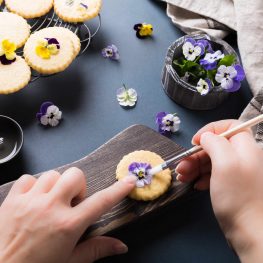
Repeat Small Shapes
Make similar forms more than once and compare thickness, symmetry, proportions, and the amount of pressure used.
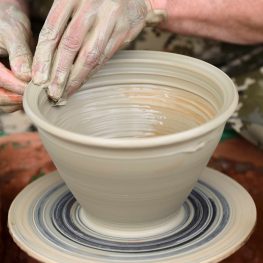
Test Before Committing
Try scoring, smoothing, carving, and texture marks on spare clay before using the same motion on a main
piece.
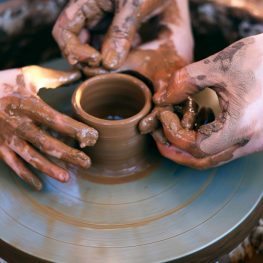
Check From Every Angle
Turn the object as you work to spot leaning walls, uneven bases, awkward attachments, and proportions hidden from one view.
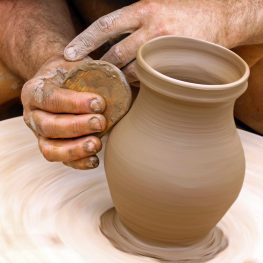
Add Detail Later
Stabilize the main volume, joins, and overall proportion before spending time on small textures, edges, or decorative features.
THE PRACTICE APPROACH
Build Control One Decision at a Time
Let the Material Set the Pace
Clay behaves differently as moisture changes. Practice includes noticing when the surface is workable, when extra water would make it weak, and when continued handling is beginning to stretch or tear the form.
Solve Structure Before Decoration
A stable base, reasonably even walls, and prepared joins come before fine surface detail. This keeps attention on the parts that determine whether a small hand-built object holds its intended shape.
Use Tools for Specific Jobs
A rib can smooth, a scoring tool can prepare a seam, and a wooden tool can refine an edge. Using each tool with a clear purpose helps avoid unnecessary cuts, dents, and flattened surfaces.
Compare Instead of Chasing Perfection
Repeated pinch forms, coils, slabs, and joined studies make small differences easier to see. Improvement can mean a cleaner seam, steadier wall thickness, better proportion, or simply knowing when to stop reshaping.